As an Amazon Associate we earn from qualifying purchases. This does not change your price.
Find your foot in four questions
- What is your shank type?Measure from the sole to the center of the thumbscrew. About 0.5 in (13 mm) is low shank, about 1 in (25 mm) is high shank. Slant shank feet are visibly angled.
- What is your maximum stitch width?Walking feet come in 5 mm and 7 mm versions. Brother sells the SA140 for 7 mm machines. Check the Brother parts list for the 5 mm version that fits your model.
- Is the top surface sticky or is the stack thick?Sticky or coated surfaces call for a Teflon or roller foot. Thick stacks and slipping layers call for a walking foot.
- Does your machine use screw-on or snap-on feet?Screw-on feet need the right shank height. Snap-on feet need a holder that matches your brand. Check the model number before you order.
Quick reference
| Job | First choice | Alternative | Needle to start with |
|---|---|---|---|
| Light to medium denim, one or two layers | Walking foot | Standard foot with a fresh needle | Jeans 90/14 |
| Heavy denim or jeans hems | Walking foot plus hump jumper | Roller foot with smooth wheels | Jeans 100/16, 110/18 at hem crossings |
| Soft garment leather, single layer | Teflon foot | Roller foot with smooth wheels | Leather 90/14 |
| Medium bag leather, several layers | Walking foot | Teflon foot, seams taped for alignment | Leather 100/16 |
| Vinyl, faux leather, oilcloth | Teflon foot | Roller foot | Match to thickness, test on scraps |
Our picks
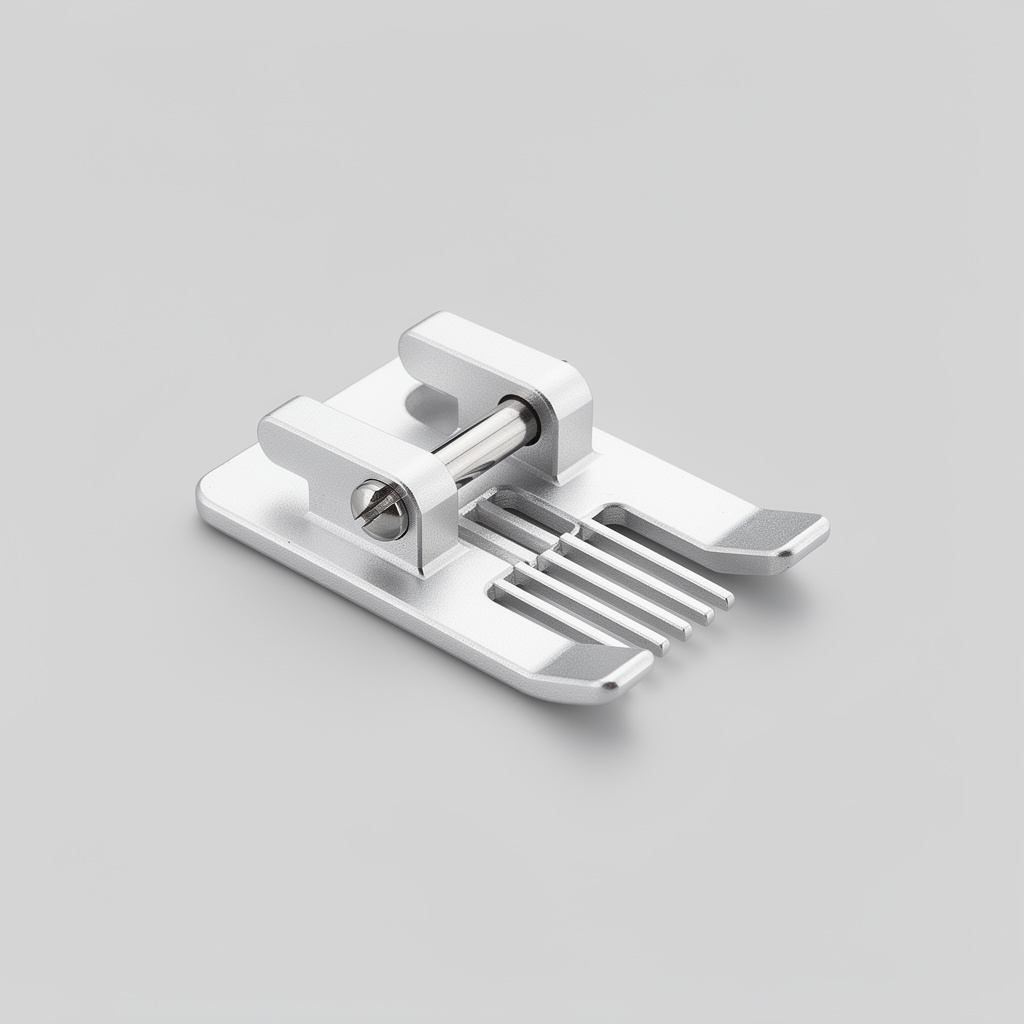
Brother SA140 walking foot (7 mm, low shank)
It feeds the top and bottom layer together, which stops drift on thick stacks. Brother notes that some PC models need a low shank adapter first. Check your manual for limits on reverse and wide zigzag.
View on AmazonAdLow shank snap-on Teflon foot
The non-stick sole glides over the top surface instead of dragging. It is cheap, so it is a sensible first buy. Confirm your brand and model before ordering.
View on AmazonAdLow shank roller foot with smooth wheels
The wheels turn instead of dragging. Textured wheels can mark delicate fabrics, so pick smooth wheels or a Teflon foot for those.
View on AmazonAdHigh shank walking foot (even feed)
Low shank feet do not fit these machines directly. Look for a listing that names your exact model.
View on AmazonAdHump jumper (jeans helper)
It keeps the foot level when it climbs onto a bulky seam. A folded scrap of denim under the heel does the same job if you have none.
View on AmazonAdOur take
We would buy a walking foot first if denim is your main project, and a Teflon foot first if leather or vinyl is. A walking foot costs more, but it solves stacked layers, hems and long seams. A Teflon foot is cheap and solves sticking. In our view the roller foot is the third purchase, not the first, unless you work with textured material. Whatever you pick, check shank height and stitch width before ordering, and put a 100/16 needle in your drawer for heavy denim.
Common buying mistakes
- Buying a foot by name only. Check shank height and your exact model first.
- Ordering a 7 mm walking foot for a 5 mm machine, or the other way round.
- Using a walking foot for wide zigzag or long reverse runs without checking your manual. Many models limit these.
- Choosing a roller foot with textured wheels for delicate or finished surfaces.
- Blaming the foot when the needle is the problem. Denim needs 90/14 or larger, and a dull needle skips stitches.
- Leaving the foot unlevel at a thick seam, so the feed dogs lose grip.
Good to know
Walking foot, Teflon foot or roller foot: which one for which fabric?
Start with what goes wrong. If the top layer drags or sticks, as with coated leather, vinyl and oilcloth, a Teflon foot glides over it. If layers shift against each other, as with stacked denim or lined leather, a walking foot feeds the top and bottom together. A roller foot grips from above with wheels. It suits textured or bulky material, such as pebbled leather or thick knits. One caveat: a metal walking foot can still drag on very sticky surfaces. Test on a scrap before you start the project.
How do I check that a foot fits my machine?
Start with shank height. A low shank foot sits about 0.5 in (13 mm) from sole to thumbscrew, a high shank foot about 1 in (25 mm). Slant shank feet are angled and only fit slant machines. Then check stitch width: a 7 mm walking foot suits 7 mm machines, a 5 mm version suits narrower ones. Last, check the model list on the product page, because Brother notes that some models need a low shank adapter.
Which needle goes with the foot?
The foot only solves feeding. The needle decides whether the stitch forms. For denim, most guides start at a 90/14 jeans needle for medium weight and 100/16 for heavy denim. They go to 110/18 where hems and side seams stack up. For leather, use a leather needle, roughly 90/14 for soft garment leather and 100/16 for medium bag leather. Treat these as starting points and test on scraps.
How do I get over a thick jeans seam?
Most problems happen at the side seam or hem crossing, where the foot tips and the feed dogs lose grip. Put a hump jumper or folded scrap of denim behind the needle under the foot heel so the foot stays level. Slow down and turn the handwheel across the thickest part. Many guides also suggest flattening the seam with a hammer first. Use a smooth hammer and a hard, stable surface.
Can I sew leather with no special foot?
For a small job, yes. One blogger suggests putting clear tape on the underside of a metal foot to reduce sticking. Lower the foot pressure if your machine allows it, lengthen the stitch and use clips instead of pins. A Teflon foot is cheap enough that we would buy one for anything more than a single project.
FAQ
Do I need a walking foot for jeans?
Not for every job. It helps most with several layers, long seams and hems, where it keeps layers from drifting. For a single seam in light denim, a fresh jeans needle and a standard foot often work.
Is a Teflon foot good for denim?
It is not the usual choice. Teflon feet are made for sticky or coated surfaces such as leather, vinyl and oilcloth. Denim slides under a normal foot, so the problem there is thickness, not stickiness.
Can I use a Teflon foot on delicate fabrics?
One guide advises against it for very delicate fabrics such as silk or satin. Use it for leather, vinyl and faux leather.
Will a low shank foot fit a high shank machine?
No. High shank machines take high shank feet, and low shank screw-on feet, including the Brother SA140, are made for low shank machines only. Look for a foot listed for your exact model.
What stitch length should I use on leather?
One guide suggests about 3.5 to 4 mm for soft leather and 4 to 5 mm for medium bag leather. Longer stitches keep the holes from perforating the hide, but test on scraps first.
More guides
- Brother Sewing Machine Presser Foot Compatibility List
- Which presser foot fits my Singer? Find it by model number
- How to check Janome presser foot fit
- Low shank or high shank presser foot: how to tell which one you have
- Which zipper foot fits my sewing machine?
- Which buttonhole foot fits my sewing machine?
- Walking Foot Compatibility by Sewing Machine Model
- Overcast foot for your sewing machine: how to choose the right model
- Snap-on presser foot adapters: what fits which machine
- Screw-on vs snap-on presser feet: what is the difference?
- Original or universal presser foot: which one should you buy?
- Which presser foot fits my snap-on sewing machine?
- Lost a presser foot? How to find the replacement that fits
- Which presser foot fits my Juki?
Sources
- Presser foot (Wikipedia)
- Brother SA140 Walking Foot Attachment, AllBrands
- Brother Low Shank 7mm Walking Foot, Schillers
- Brother SA140 Walking Foot 7mm, Sewing Machine Outlet
- Roller Foot, Sewn By Tanya
- 4 Types Of Presser Feet, Bobbin Diary
- How To Sew Leather On A Sewing Machine, Sew Alice
- How To Sew Leather With A Home Sewing Machine, Lisa Mecham
- Brother SA140 7mm Walking Sewing Foot Low Shank : Target
- Brother SA140 Walking Foot, AllBrands (product page)
- Walking Foot (Low Shank)
- Brother SA140 7mm Walking Sewing Foot Low Shank
Last checked:
About the author: Will Riegger
Editor in charge
